
 From the first moments when we meet Douglas Spaulding, we know his life is one of imagination and adventure. In Dandelion Wine, Doug is tantalized by the summer season, and his full-bodied experiences entice the most reticent reader to enter again into a season of discovery. One of the most notable elements of Bradbury’s fiction is this ability to depict the wonder and sometimes the harsh reality of childhood through experience and imagery. We can relive our own childhood awakening through Douglas’s first summer moments. Riding in his Dad’s car through the countryside, Doug declares that Some days were good for tasting and some for touching. And some days were good for all the senses at once. This was that day for Doug where he literally became aware of every sight, sound, and taste about him in the woods. I, too, have shared in some of those childhood experiences. I remember going on fishing trips with my father and big sister in the early Mississippi morning hours to a local pond or practically anywhere we could drive his 1971 Chevy truck under an hour’s time. Even at five or six years of age, I could bait my own hooks with crickets and worms. The problem was that I was easily distracted by the wonder of where we were. I could sit on a bank and doodle my bobber in the water for a time, but almost always, I would leave my pole and wander a dirt path or two, investigating for critters or anything I couldn’t catch in my own backyard. Some days were good for tasting and some for touching. And some days were good for all the senses at once. 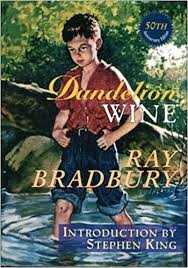 For me, the freedom to explore my little unknown habitat, even for a morning, was a treasure. I could sit still and listen to the wind in the pines, the jays and their squabbles, the plunk of bullfrogs for what seemed an infinitesimal day. I could close my eyes and just feel the aliveness around me, the breeze, the humid liquid air, the sense of a twig in my hand as I dug in the dirt. Like Doug, I could then open my eyes and know that absolutely everything was there. The world, like a great iris of an even more gigantic eye, which has also just opened and stretched out to encompass everything, stared back at him. It’s the utter sense of being fully awake and being wholly part of a place and moment in time. Though Doug begins his summer declaring I want to feel all there is to feel, he soon discerns that time is slipping quickly by: The only way to keep things slow was to watch everything and do nothing. Through the experience of life and death in the town and their family, Doug and his brother realize that happy endings don’t always go with summer, but it is a part of awakening to life. 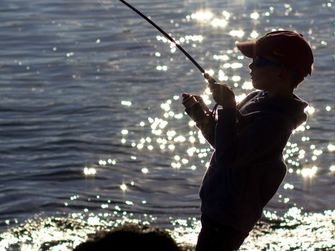 Photo by Holger Link on Unsplash On one of those same summer fishing days, I remember my first experience with death, and it too, startled me. I had been fishing with a juicy worm in the hot sun without luck when I suddenly felt my bobber jerk deep. I hollered for my dad who ran to help me pull the fish in. It was a red snapping turtle instead, and it was huge to my small eyes. As fascinating as it was, it wouldn’t let go of my big worm even though my dad tried to get it to bite a stick instead. That was one aggressive turtle, and it wouldn’t let go of that line. My dad later said that the turtle had never swallowed the bait nor hook but was just plain ornery. Though I was fascinated by their tussle, my dad shouted at me to get back, then he tried again to get that turtle to grab the stick, and it did. As soon as it crunched, my dad whipped out his Bowie knife from his boot and cut off its head right where it had extended its neck. I was mortified and sickened, for I had caught many a tiny box turtle in our yard as a pet kept for weeks at a time, and I sure didn’t understand my dad’s reaction. I just sat down in the dirt and cried out of pure shock as my dad flung the parts in the lake.
Like Tom who saw a different part of his mother’s character one night at the ravine or like Doug who loses a friend to a move or as both as they lose neighbors and their own great-grandma to death, so many changes come at unexpected times, and something as pleasant as a summer day can devolve into horror and grief. The wonder and simple pleasures of summer then can not only be contagious at times as we revel in creation and experience, but also tempered by the realities of life and death. originally posted 3/31/17 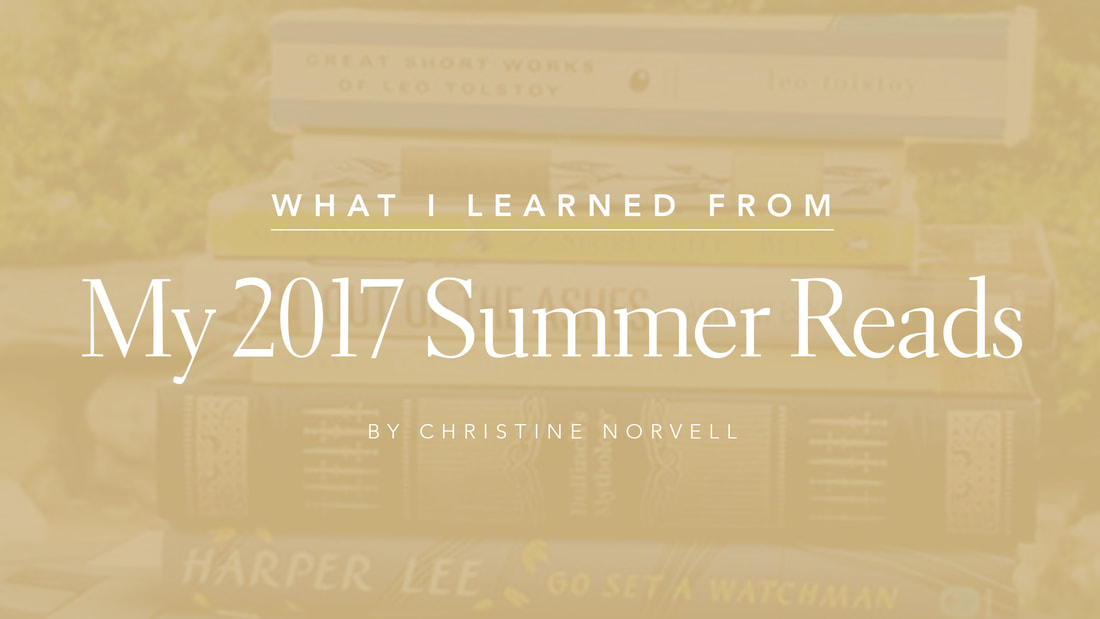 I FEEL LIKE I'M ALWAYS READING with plenty more to read, but I don't think I would ever describe myself as a well-read person. I have a feeling I'm not the only one too. I like reading and learning, plain and simple. I thought I'd share bits of my summer stack from last year. My stack is incomplete without my Kindle reads, but it's a fair representation. Here are my categories:  FAVORITE LIGHT READS.
 Binge drinking, binge eating, and binge-worthy shows speak to man’s addictive nature. But what about binge reading? Publishing houses and their marketing machines presume it’s all about sequels and series. “Give them more!” they cry.
But the truth is that avid readers have done it for centuries, even for the same book. Two hundred years ago even the wealthiest purchased subscriptions to lending libraries because books were still quite expensive. Thus, reading audiences across Europe were understandably small until the educated population increased. It’s no wonder that reading more than one book or rereading one would be considered an indulgence. My reading binges usually correspond with school breaks or a long weekend. It’s a predictable thing. Give me some time off of work, especially time in airports, and I speed read. My travel home from Los Angeles last week made way for two full novels in twelve hours. Though I didn’t choose them for depth, I did find myself learning new things and appreciating both authors. Louis L’Amour’s Callaghen features a veteran soldier in his thirties who has the right amount of grit and instinct to stay alive with his patrol in the Mojave Desert post-Civil War. Irish to the core, Callaghen is clear L’Amour hero material: He was a tall man, with wide shoulders, a well-setup man who ordinarily moved easily and with some grace. Around the post he was something of a mystery. He is a clear underdog, and you find yourself easily rooting for a cliched character: He rode straight into the morning, his gun ready, and death rode with him, almost at his side. The story is almost too predictable, too suitable for an easy read. The characterization is flat as can be, but L’Amour has a way with action scenes blended with a heavy setting in this plot. It’s clear that he researched a great deal because the desert is a living character throughout the story, for the desert is always waiting . . . the desert itself speaks, for the earth lives, and in the night’s stillness one can hear the earth growing, hear the dying and the borning and the rebirth of many things. A bit of sand trickles, a rock falls, a tree whispers of moans—these are the breathings of the earth. Oh, the setting! I want to write like that. I was captivated by this place of life and death and felt that alone made the novel worthy reading. Published twenty years later, Chinua Achebe’s sequel to Things Fall Apart, No Longer at Ease is a 1950s drama illustrating the tension of modern culture grating against village wisdom. Achebe’s clever use of dialogue uniquely reflects the people, and I for one, loved to hear them speak. The story follows the life of Nigerian Obi Okonkwo, the eldest son of Isaac Okonkwo and the first selected by the Umuofia village to go to university in London. He has four years to pay back four years of schooling once he returns. And return he does, though not as the expected lawyer nor with the ideal wife. Okonkwo finds employment in the large city of Lagos and quickly discovers how easy it is to spend his advance salary and how to land in debt. As a member of the scholarship board, Okonkwo idealistically refuses bribes of any kind. He expresses how he hoped to be the one who changes the government system, and everyone knows it all runs on bribery. Unfortunately, things do fall apart. His mother falls ill, and he travels to his native village where he is forbidden to marry his girflriend Clara because she is osu, a Nigerian whose family line had once been dedicated to pagan gods. As the plot continues, the one thing I am struck by is how similar this story is to the American play of the 1950s. Think the despondency of Death of a Salesman. Though written in 1994, Achebe lands the story firmly in a patch of modern malaise, the feeling that yes, things will fall apart, and yes, things will only get worse. And more so, the characters and the story will lose hope, if they ever had a bit at all. The theme is familiar, yet Achebe’s writing style remains engaging. My brief binge is over, and I have many books on my platter yet. Yes, a platter. Who has room for a mere plate anyway?  MOST OF MY STUDENTS would like to do other things than read a few chapters of required reading of an evening. For any literature teacher, what’s worse is that they can easily find free poem, chapter, novel, and play summaries with great ease online. After all, summaries are so much shorter, aren’t they? So one of my first tasks of the year is to appeal to their integrity with a lesson from the Psalms. Let’s start with this. If I read a summary of a chapter in the Bible, what do I lose? Consider Psalm 23. This version comes to us from Shmoop: The Lord (God) acts as a shepherd to the speaker. He makes sure the speaker isn't lacking any necessities. The Lord takes the speaker to peaceful and relaxing places, like green fields and calm waters. He also tends to spiritual well-being, making sure that the speaker stays on the right path. . . . This happy state of affairs will continue for the rest of the speaker's life, and beyond. He doesn't ever plan to leave the protection of his host and shepherd. It’s a summary alright, but where’s the richness? Where is the personal sense of me being the sheep? Adonai is my shepherd. He’s not a neutral speaker unless David somehow knew of political correctness. What happened to vivid verbs like leads, guides, refreshes, comforts? With David, I feel the certainty of his prayer. Adonai prepares a feast before me publicly in the presence of my enemies. How is that a happy state of affairs? Does the summary even capture the essence, the flavor, the mood of David’s perspective? I am anointed by God, and his love and goodness practically chase me. I know like David that I can abide with God, dwell with Him. Not leaving his protection sounds so shallow. This type of example is simple and clear. It's more than a matter of wording. It's as if the summary reduces not just the number of words but the intention and truth behind them. The experience of reading the word of God simply cannot be redacted or it's no longer reading the word. In the same way, the experience of reading literature is just that—an experience. Shortcuts cheat us. The wealth of reading remains with us just like living moments do. Reading allows us to walk through, to live beside, to express, to imagine within the lives of others. |
 RSS Feed
|
|
|
© COPYRIGHT 2018-2026 CHRISTINE NORVELL. ALL RIGHTS RESERVED.
SITEMAP