
 TEACHING MY STUDENTS how to improve their own writing is no easy task. I emphasize content and typically focus on one to two stylistic elements per assignment. At the beginning of the school year, I quickly noticed that my seniors were overfond of the verb “use” in most any casual or formal writing assignment. We quickly built a synonym base for the word on the whiteboard and discussed connotations. For several months, I had them search and highlight the word, allowing for a single use. As I worked on my novel these past months, my editor had to repeatedly teach me how to balance my use of active and passive voice in both dialogue and narration. Repeatedly. It took a number of attempts for my brain to get it. And practice was very much a part of the process. My point is that it often takes mini-lessons like these as we each take steps in our writing or even speaking. And that is when writing style guides can be such a help. But forget writing classics like Strunk and White’s The Elements of Style. The concept of spelling out rules with writing examples was tackled well before the 20th century. Think of Aristotle’s Poetics in 4th century BC. Though he focuses on drama and epic, he does address the use of language and a playwright’s diction. But I would be remiss if I didn’t also consider a short but splendid stylebook of the first century, one that considers the written and the spoken word. More than our contemporary guides, Cassius Longinus explores the motive of the writer. Why is he writing? What is his end? But more importantly, can we attain sublimity of language? Are we capable of learning it? A lofty passage does not convince the reason of the reader, but takes him out of himself. That which is admirable ever confounds our judgment, and eclipses that which is merely reasonable or agreeable. To believe or not is usually in our own power; but the Sublime, acting with an imperious and irresistible force, sways every reader whether he will or no.” In On the Sublime I especially enjoy how Longinus speaks of the artistic turn of phrase, the creator's craft, as he cites concrete examples from Homer, the Bible, Sappho, Herodotus, Aristarchus, and so on. The sublime is a simple term that implies so much. The "loftiness and excellence of language" remain the ideal in writing as opposed to fluff or bombast. And yes, Longinus, fully discredits those as false writing. I think today we would call that emotional or reactionary writing. Bombast is simply writing that goes too far. The writer recognizes the need to be original in his use of description and goes overboard. Longinus eventually calls it pathetic. It seems everyone wants to be original. Too true. In Part XV, Longinus provides real examples from Homer, Sophocles, and others that we can imitate. Grand language and perfectly crafted imagery are praised most, but his third and fourth principles are the most practical. Combine figures of speech or rhetorical devices for the most effect. A “close and continuous series of metaphors” is distinctive. Use conjunctions intentionally. Arrange your words in a certain and best order. There is so much more to his advice and criticism, but I especially appreciate Longinus’ analysis of a writer’s style. After we have picked at all the parts, how do we determine what the best writing is? His final pages explore this very question-- Is it not worthwhile to raise the whole question whether in poetry and prose we should prefer sublimity accompanied by some faults, or a style which never rising above moderate excellence never stumbles and never requires correction? ... these are questions proper to an inquiry on the Sublime, and urgently ask for settlement." And Longinus finds it hard to do. At first, he says a reader can discern an innate harmony within an essay. The reader simply knows it is sublime writing. But then, Longinus provides several examples of what sublime language is not. In other words, good writing remains to this day something easy to recognize yet hard to define.
Read "On the Sublime" at Project Gutenberg.
0 Comments
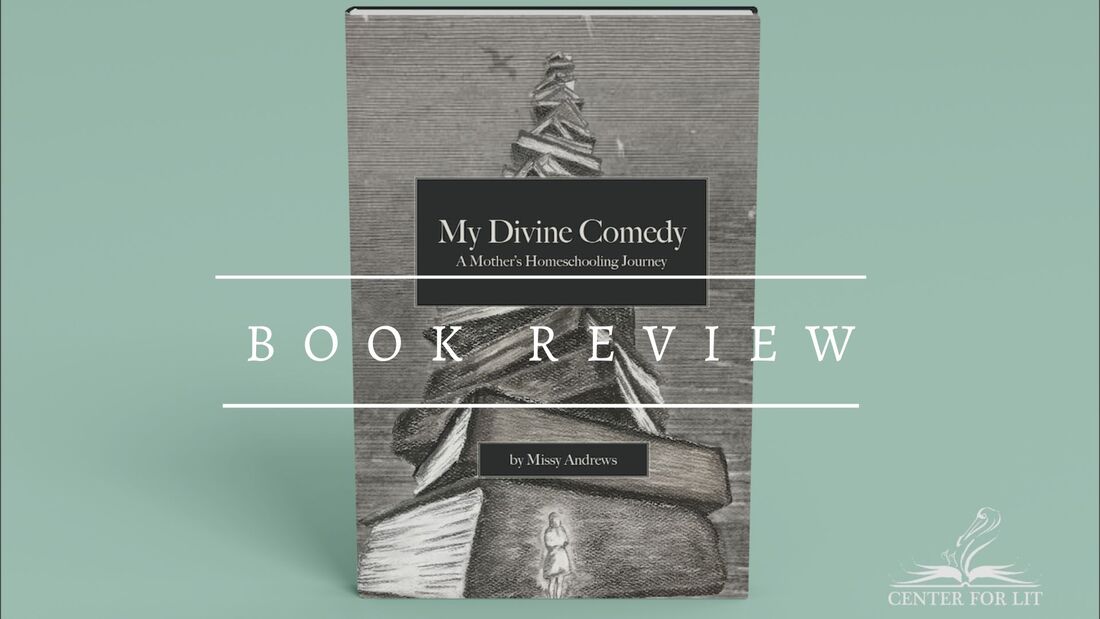 Experience humbles us. So does sin. In My Divine Comedy: A Mother’s Homeschooling Journey, Missy Andrews not only presents an educator’s memoir but also a spiritual trek, one reminiscent of Petrarch’s “Ascent of Mount Ventoux.” Andrews details the failures of relying on ourselves as parents and educators. Those failures spoke to me as a mother and as a teacher because she calls us to remember that motherhood and home education are “fruitful work.” But not before reminding us that our students might be performance-driven because we have modeled it for them first. It is the age-old problem of confusing what we do with who we are. Our work as educators or as parents is not our identity nor should our identity be based on our performance checklists, or testing, or following the latest and greatest curriculums. If we do not see that we are imperfect, that our motives and our ideals are impure, we can be guilty of creating an idol out of education itself. Andrews asks us if we’ve mistaken “the good gifts of God for the Giver.” And that’s the point. What is education really? Andrews has a wonderful way of describing what it is by what it isn’t. I was captured by her comments on what she called “the identity race” that we see in every type of schooling—public, private, home, or co-op. We can mistakenly train children and teens with questions like “What are you good at?” rather than “Who are you really?” When we equate schooling with performance and doing, we mislead our students and cause them to ask, “Is anything good enough ever?” Here, she poignantly cites the account of the prodigal son and his brother in Luke 15. In this instance, both boys saw themselves as doers, employees, rather than as sons of a loving father. Andrews leads us through scripture and literature to show us the truth of Proverbs 29:25 — the fear of man is a snare because we become man-pleasers. She is clear. We will never know it all and neither will our children or our students. They need to know this from the beginning. True education familiarizes a child with the stuff of goodness, truth, and beauty in order to equip him with eyes to see his true condition, the shortfall between the ideal and the real. This self-awareness has the potential to awaken humility and prime the soul for an encounter with the sole source of goodness, God Himself.” Andrews’ memoir is not about perfect solutions in education or becoming the ideal homeschooling parent. Rather, it’s about a shift in perspective, a humbling awareness of God’s abundant grace that makes us fit for good work.
Read more Book Reviews on classic and contemporary novels.  No, there's no such thing as husband poetry.
I mean my husband asked me to teach him more about poetry. My husband felt there were decided holes in his education, but I thought surely somewhere in junior high or high school a dedicated teacher must have taught him some famous verse. He swears he remembers nothing of the sort. Thus, three months ago, my husband picked up a volume of Emily Brontë poetry and determined to understand what he read. He was already a decided Brontë sisters' admirer, so likability wasn't an issue. What did become an issue was rhyme scheme and syllable structure. So what to do? As he read poetry before bed each evening, he began to ask me questions like Why does this line have eight syllables and this one has ten? I know, I know. Nerd alert. How many married couples talk like this before falling asleep? Anyway, I began by asking him not only to count syllables in every line, but to also determine if there was a pattern. How many lines are in the overall poem? Did you say 14? So what type of poem is that? What was Bronte imitating? Pretty soon I realized we needed to start at the beginning. All the intelligent Rush lyrics of his youth bred a natural appreciation for poetry and the lyrical art, but that didn't mean he understood the required elements of the poet's work. This is what we've learned so far in the poetry journey: STEP ONE: Read poetry you like, poetry you're drawn to. Each person has their own taste of course. Bronte did that for him as did Frost and Seamus Heaney. STEP TWO: Break apart the poem skeleton. This is tricky because if you spend too much time identifying parts you can also remove the pleasure of reading for the beauty of the thing. At the same time without the knowledge of parts it's hard to appreciate the whole. Think of the human skeleton. Knowing the parts of the body that frame it and allow it to stand and move increases our appreciation of its overall appearance. STEP THREE: Find a teaching text that's written at your level. Perhaps the most difficult creature to find, an instructional book is a necessary thing unless you already have an English teacher spouse at your side. From homeschooling curricula to college-level texts, there are too many choices. I've read quite a few that make poetry more difficult and even more that make it too simple. The trick is to find the one that fits you. As an adult learner, my husband didn't want a middle school beginner though he was willing. Instead we went entirely old school. Why not learn from two distinguished Yale professors? MY TOP RECOMMENDATIONS Understanding Poetry by Cleanth Brooks and Robert Penn Warren. It's no longer in print but is a valuable text if you find one. You can learn so much from reading just two chapters on narrative and descriptive poems. Brooks and Warren include plenty of examples and commentary on how the poem works and what it means. It is most helpful to learn from their wealth of experience and to learn from the types of questions they ask about each poem. The Harp and Laurel Wreath by Laura Berquist. Berquist has compiled a thorough representation for grades 1-12. Poems are listed for memorization, analysis, and writing practice. She includes questions following each poem that are perfect for class discussion or independent learning. The appendices include most every literary term tied to poetry study in addition to plentiful examples on meter, rhyme, and verse. *originally published November 29, 2017 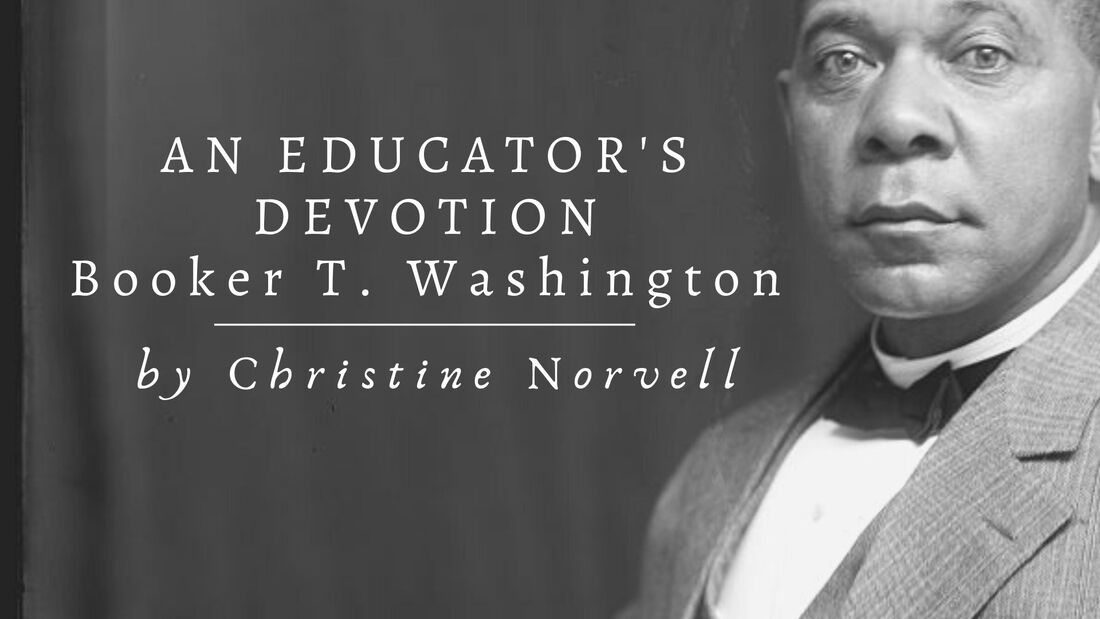 DEVOTION CAN MEAN MANY THINGS. Sometimes we don’t realize we are devoted to something until we see how much time we give to it. That’s how I would describe the steadfast quality in Booker Taliaferro Washington. Beginning in the 1880s, on almost every Sunday evening at Tuskegee Institute, Washington collected his students, teachers, and visitors to speak to them. The gathering wasn’t called a chapel service nor a Bible study, simply Sunday Evening Talks. His devotion to education and to the people who surrounded him in his work was clear. As Washington said, Unless you have got truth, you have failed in your purpose to be educated.” In these talks, Washington speaks of practical education, the trades, and working with our hands. He addresses qualities and virtues such as self-reliance, obedience, justice, and responsibility in order to study the nature of man. He mentions disappointments, homesickness, difficulties with people, and the danger of success but adds that we must always be aware of opportunities, even seeing life as a series of opportunities: And so you will find it all through life, especially for the next fifty or one hundred years, that those persons who are going to be constantly in demand, constantly sought after, are those who make the best use of their opportunities, who work unceasingly to become proficient in whatever they attempt to do.” On February 10, 1895, Washington illustrated the position of his students this way. He explained coming out of slavery as coming out of a sickbed where a man had been for a long, long time. The sick man would recover given time and opportunity, but he would have to learn again how to use his muscles, how to eat, how to function and work. Placed side by side with a healthy man, the sick man has a long way to reach his full strength. It is a process. The metaphor extends to equality between the races. By 1902, a collection of these talks was published by Doubleday as Character Building: Being Addresses Delivered on Sunday Evenings To the Students of Tuskegee Institute. The booklet reads, “The speaker has put into them his whole moral earnestness, his broad common-sense and, in many places, his eloquence. Many of Mr. Washington's friends have said that some of these addresses are the best of his utterances.” In the talk “Helping Others,” Washington speaks to all of us: This institution does not exist for your education alone; Johnston, Frances Benjamin, photographer. Booker T. Washington, half-length portrait, seated., ca1895. Photograph. https://www.loc.gov/item/2010645746/.
 AS I HAVE reread lots of C.S. Lewis for the past two months, I was delighted by his many timely suggestions in An Experiment in Criticism. Lewis truly shuns critics and their systems. He would have us ask what benefit literary criticism offers if each theory presents but one angle. But more than that, the critics have spent so much time developing their critical theories that they just might have forgotten why they began writing about reading in the first place. Tongue-in-cheek, Lewis says we are to leave them, the critics, to their own (now better informed) reactions because “When I inquire what helps I have had in this matter [in understanding what I read] I seem to discover a somewhat unexpected result. The evaluative critics come at the bottom of the list.” I had to laugh aloud at that. Let's all boot the critics! More than anything Lewis reminds us that the value of what we read lies with the reader alone-- For me it stands or falls by its power to multiply, safeguard, or prolong those moments when a good reader is reading well a good book and the value of literature thus exists in actu.” He wants us to think for ourselves and think of what we really derive from our reading. “If we take literature in the widest sense, so as to include the literature both of knowledge and of power, the question ‘What is the good of reading what anyone writes?’ is very like the question ‘What is the good of listening to what anyone says?’ Unless you contain in yourself sources that can supply all the information, entertainment, advice, rebuke and merriment you want, the answer is obvious. And if it is worth while listening or reading at all, it is often worth doing so attentively. Indeed we must attend even to discover that something is not worth attention.” Simply put, if something is worth reading, it is worth our full attention. More than understanding and discernment, though, what we read can reach us in deeper ways than we know. Whether we get out of ourselves or dive more deeply inward, Lewis says that one reason we happily read fiction is because we delight in the stir of our imaginations-- We want to see with other eyes, to imagine with other imaginations, to feel with other hearts, as well as with our own. We are not content to be Leibnitzian monads. We demand windows. Literature as Logos is a series of windows, even of doors. One of the things we feel after reading a great work is ‘I have got out’. Or from another point of view, ‘I have got in’; pierced the shell of some other monad and discovered what it is like inside.”  AGES AGO I took a college course titled “History of the English Language.” In the textbook, Pyle and Algeo argue that language development makes us human. They begin with what we know—speech comes first then writing. Simply put, we can talk before we can write. There are spoken languages in fact with no written form. In spoken language, inflection and stress provide intended meaning. Writing itself distinguishes meaning through its process, but it is useless without words. Words are building blocks, units, ingredients, pieces of a sentence or thought puzzle. But before it entered an English dictionary, the word word was known by the Greeks as logos. In pre-Socratic philosophy it was the principle governing the cosmos because it encapsulated human reasoning. The Sophists later saw it as the topic of rational argument or the arguments themselves. The Stoics viewed logos as nous—the active, material, rational principle of the cosmos that was identified with God. It was both the source of all activity and generation and the power of reason residing in the human soul. In Judaism, logos becomes the living, active word of God. It is creative power, and it is God’s medium of communication with mankind. In Christianity, logos becomes the creative word of God which is itself God incarnate in Jesus in John 1.
Words. As I write this summer, I am ever conscious of how words are used, and not just mine. The writer of Ecclesiastes 3 might describe it this way—words are used to inspire fear, to bring wisdom, to bring joy, to show emotion, to display passions, to attack or defend, to bring comfort, to encourage, to belittle or tear down, to cause pain, to bring healing, to mend. Whether I write fiction or nonfiction, blogs or essays, speeches or stories, the inherent caution is there. My words, our words, have life as we give them. As writers, readers, and speakers, we share a responsibility to use them well.  MY STUDENTS ARE CERTAIN that the word thesis applies only to nonfiction. That is after all the only way they have ever personally used it. In essays. In speeches. In formal rhetoric classes. But the word itself has no such limitation. In ancient Greek, the word means to physically place a proposition statement, to place it with intention. In logic, further etymology explains it was recorded in the 1570s as a formulation in advance of a proposition to be proved and only later in the 1650s did it come to mean a fully written speech as a dissertation presented by a candidate for a university degree. (1) Though the word itself can mean a sentence or a paper or a speech, I would like to speak of it as a seminal sentence, the one thought (or close to one) that is the seed, the pith, of a story or novel. It’s not something we the readers create. It’s a sentence the author wrote. So how do we find that sentence? Or I could better ask, how do we recognize it? I offer some questions to help:
My best examples come from Norman Maclean’s novella, A River Runs through It, because there are many sentences that capture the novel. And that’s the fun of analysis. As readers who have experienced the story, we get to choose. Do we go with the poetic, like the first sentence which holds true for the entire story? Maclean writes, “In our family, there was no clear line between religion and fly fishing.” But what of the last pages? After experiencing the grand Elkhorn Canyon and so many beautiful moments on the Big Blackfoot River, we read, “A river, though, has so many things to say that it is hard to know what it says to each of us.” And Maclean’s final words ring with beauty— Then in the Arctic half-light of the canyon, all existence fades to a being with my soul and memories and the sounds of the Big Blackfoot River and a four-count rhythm and the hope that a fish will rise. Or could that pith of a sentence be a philosophy like the curiosity theory mentioned by Maclean? Does it apply to fishing and life? “It is the theory that fish, like men, will sometimes strike at things just to find out what they are and not because they look good to eat.”
Or could we choose the theme of help when Norman offers his brother help after posting bond to get him out of jail? A few pages later, ironically, Paul asks if Norman should “help” his brother-in-law, “But maybe what he likes is somebody trying to help him.” How true for the brothers themselves. Norman’s wife Jessie says, “Why is it that people who want help do better without it—at least, no worse.” But then his father defines it— “Help is giving part of yourself to somebody who comes to accept it willingly and needs it badly. So it is...that we can seldom help anybody. Either we don’t know what part to give or maybe we don’t like to give any part of ourselves.” He comments that perhaps it is just being willing to help that counts. From the many angles of an angler, we see that a story can flow with many thesis sentences. But I would also add this caution. A story can't be interpreted in dozens of ways. It shouldn't be. It can't just mean what you want it to mean. We rely on the author's words because he does have intent. The living words of a story have a soul, and that is the sentence I look for. 1. Douglas Harper, Online Etymology Dictionary.  TEACHING MY STUDENTS how to improve their own writing is no easy task. I emphasize content and typically focus on one to two stylistic elements per assignment. At the beginning of the school year, I quickly noticed that my seniors were overfond of the verb “use” in most any casual or formal writing assignment. We quickly built a synonym base for the word on the whiteboard and discussed connotations. For several months, I had them search and highlight the word, allowing for a single use. As I worked on my novel these past months, my editor had to repeatedly teach me how to balance my use of active and passive voice in both dialogue and narration. Repeatedly. It took a number of attempts for my brain to get it. And practice was very much a part of the process. My point is that it often takes mini-lessons like these as we each take steps in our writing or even speaking. And that is when writing style guides can be such a help. But forget writing classics like Strunk and White’s The Elements of Style. The concept of spelling out rules with writing examples was tackled well before the 20th century. Think of Aristotle’s Poetics in 4th century BC. Though he focuses on drama and epic, he does address the use of language and a playwright’s diction. But I would be remiss if I didn’t also consider a short but splendid stylebook of the first century, one that considers the written and the spoken word. More than our contemporary guides, Cassius Longinus explores the motive of the writer. Why is he writing? What is his end? But more importantly, can we attain sublimity of language? Are we capable of learning it? A lofty passage does not convince the reason of the reader, but takes him out of himself. That which is admirable ever confounds our judgment, and eclipses that which is merely reasonable or agreeable. To believe or not is usually in our own power; but the Sublime, acting with an imperious and irresistible force, sways every reader whether he will or no.” In On the Sublime I especially enjoy how Longinus speaks of the artistic turn of phrase, the creator's craft, as he cites concrete examples from Homer, the Bible, Sappho, Herodotus, Aristarchus, and so on. The sublime is a simple term that implies so much. The "loftiness and excellence of language" remain the ideal in writing as opposed to fluff or bombast. And yes, Longinus, fully discredits those as false writing. I think today we would call that emotional or reactionary writing. Bombast is simply writing that goes too far. The writer recognizes the need to be original in his use of description and goes overboard. Longinus eventually calls it pathetic. It seems everyone wants to be original. Too true. In Part XV, Longinus provides real examples from Homer, Sophocles, and others that we can imitate. Grand language and perfectly crafted imagery are praised most, but his third and fourth principles are the most practical. Combine figures of speech or rhetorical devices for the most effect. A “close and continuous series of metaphors” is distinctive. Use conjunctions intentionally. Arrange your words in a certain and best order. There is so much more to his advice and criticism, but I especially appreciate Longinus’ analysis of a writer’s style. After we have picked at all the parts, how do we determine what the best writing is? His final pages explore this very question-- Is it not worthwhile to raise the whole question whether in poetry and prose we should prefer sublimity accompanied by some faults, or a style which never rising above moderate excellence never stumbles and never requires correction? ... these are questions proper to an inquiry on the Sublime, and urgently ask for settlement." And Longinus finds it hard to do. At first, he says a reader can discern an innate harmony within an essay. The reader simply knows it is sublime writing. But then, Longinus provides several examples of what sublime language is not. In other words, good writing remains to this day something easy to recognize yet hard to define.
Read On the Sublime at Project Gutenberg.  IN BOOK I OF HIS CONFESSIONS, Augustine writes that for all the literature he read, for all the glory and passion and tears shed as his teachers required him to read about Aeneas and Odysseus, he never thought to apply what he read of the “empty romances” to himself-- I was obliged to memorize the wanderings of a hero named Aeneas, while in the meantime I failed to remember my own erratic ways. I learned to lament the death of Dido, who killed herself for love, while all the time, in the midst of these things, I was dying, separated from you my God and my Life, and I shed no tears for my plight.” I realize that in his youth Augustine is lamenting his separation from God, even his ignorance of Him. Yet I wonder to myself how he skipped the step of application, whether spiritually or otherwise. He obviously experienced the pathos of the stories as led by his teachers. But story is more than emotion. Would he not wonder if he would do as Aeneas did, for he does admit to tears by the end? Did he not learn about himself by reading The Aeneid? Oh, I wish I could ask him. This is the question for me. Story is experience. We want to connect to characters, to empathize with them, to cheer, to rage, to grieve, to love because our life experiences are stories. But if we fail to learn about ourselves from literature or history, Augustine simplistically concludes that stories are “empty fantasies dreamed up by the poets.” Though they are “enchanting,” they are “futile.” He feels there are more valuable studies and would rather jettison them entirely.
I don’t know what Augustine’s teachers modeled, but I do know that as a teacher, I want to model application. Yes, I want my students to understand a story. But that is the simplest step, the first shallow one leading into the water at ankle depth. I want to equip them with tools and methods and context to analyze a piece further in knee or waist-deep water. And most importantly, I hope to model application to the heart. If I have not asked, “What does this show in our humanness?” Or “How can God use this story regardless of the author’s intent?” then I will have drawn up short.  I SERIOUSLY NEED TO WRITE this cautionary book for secondary teachers. Teaching is really not for everyone, though I still hear stories about how someone just fell into it as a backup job. Sometimes they are a natural, and you hear, "Oh my goodness, I am called to this!" Good for them, but that is not normal by any means. And it’s not that teaching requires a certain personality. Any type of personality can fit, but I do think flexible cholerics have an advantage. 1. Teachers may fail because they didn’t quite understand one word--preparation. This is before employment. This goes back to college coursework. In the good ol’ days, an education degree was required in most states. Drama education, Math education, English education. These were actual degree names. They are rarities now. In my own state, all you need to do is pass one general and one specific certification test and you can teach grades 6 through 12. Just like that. No training. No coursework. No student teaching. I suppose that a number of states were trying to entice retirees or other job lookers. Unfortunately they just hired inexperienced people (can we call them teachers?) who quickly quit. Here’s why the college coursework is part of that preparation. I had classes in understanding the statistics of test scores and what they really tell us, I had a course in creating every type of visual aid on the cheap in addition to tech training, and most importantly, I had an entire semester class on the ever practical classroom management. This was nuts and bolts. This was the class that covered so many realistic scenarios that I really was prepared to teach 17 year olds when I was 21. You can’t tell me that a few exams will do that. And for the private schools who don’t require teaching degrees, certification, or even experience, good luck! I’m sure those newbies were great in their interviews. They probably shared inspiring tales of how one key professor truly showed them how great teaching could be, as if watching a salesman charm a customer makes me a fabulous salesman. If you fall into this scenario, then I only have one piece of advice. Before you are literally responsible for a group of little humans, you owe it to them to know what you are getting into. It doesn’t matter if you need college credit. You need life experience. Call a few public or private schools and ask to observe one of their master teachers in the subject you want to teach. Maybe they have to vet you. Maybe they meet with you in person in an interview of sorts, but arrange to go for as many weeks as they will allow and absorb how it’s done. Imitation of good practices goes a long way. 2. Once hired and in the trenches, teachers also fail when they don’t understand that preparation is daily. It requires dedicated time. You do read, study, practice, and prepare before you teach anything. The first few years of teaching a subject well require serious time. If you wing it, you usually fail. If you have no idea where you want a class discussion to go because you didn’t do the reading homework you assigned to your own students, then don’t be surprised at their confusion. How can you lead well, if you have no aim? Actually, that may be part of the problem. A good number of average teachers have succumbed to the malaise of biding their time until they hit twenty years and retire. Their aim is no longer about learning or about the lives they influence. How can you lead well if you have no aim? 3. Teachers may also fail if they don’t understand the reality of living, breathing, and teaching for an entire school year. In the real world as opposed to the school world, you have good days, bad ones, and meh ones. The same goes for a school year. Even when you are prepared, even when students do the homework, even when you’ve managed your class setting well, your day can be blah. You can even have weeks of blah. Yes, weeks! Or the one thing you can’t predict—one class will interact with you in a phenomenal manner and all the others are a major disappointment. The point is that it’s not you. Well, not usually. Even if you thought you were inspiring, sometimes human beings are unpredictable. It happens. Know that it happens. A realistic viewpoint helps. 4. In the same vein, teachers also fail when they are judged by their performance. First year evaluations in a public or private school can be intense. Surprise class observations. All kinds of advice. Some helpful bits thrown in with some harsh ones. But this is a broken system to me. These are snapshots of you, just 30 to 45 minutes of your teaching LIFE once a month, if that. If any administrator were to observe you five days in a row, then and only then, would they have a realistic picture of who you were as a teacher working with children. I can’t change that system, but I will tell you what many public and private school veterans would advise-- Forget acting like this is a normal class period. Do not go on as if this is a typical day. Instead, by the seat of your pants, pull out all the stops. This is an audition. Teach to impress the students and the administrator. Quote the best material. Ask the best questions you can. Roam around the room and interact more than ever. This should be a damn fine performance!” I know. It sounds overdramatic, but until I learned this fact of life, my evaluations were lower than those who practiced this. Really. Thank God I had a tremendous veteran teacher mentor me my first year. And trust me, it is true for both public and private schools. (I do know teacher performance is also judged by student performance. But testing, its practice, its ideals, would require more space.) 5. The most significant reason teachers fail is because they are unable to manage students well. If you can’t control them, you can’t teach them. It does sound awful, but it’s true. That word control sounds like utter manipulation. And it is. If you manage your students’ behavior well, then you are manipulating them. Manipulate does mean “to handle skillfully.” You are hopefully creating an environment where you keep negative or interfering behaviors in check at the same time that you teach and interact. You are respectful and respected. You inspire and create interest, ALL as you teach. This is skill. This requires experience. Some teachers fail regularly at this because they just aren’t good at predicting human behavior. Sometimes they are just too hopeful that students might choose well regarding their own behavior (Hint: Assume they won’t choose well). And sometimes, teachers really don’t know what they’re doing. They might suppose they are instructing little adults, and that is a serious mistake. How to help? If a new teacher lacks experience, we must require more. That is the formula. They must observe others who do it well. That does not mean becoming exactly like another personality. You still have to be yourself and acquire these skills to suit your personality. At the same time, you must have a mentor teacher in the same building and subjects as you. If it’s not required and one is not assigned to you, humble yourself and ask around. I think mentors should be assigned for the first three years, not just the first. If you ever think you are done learning from someone, that they have taught you everything you could ever need, then you will fail. Working side by side for several years is invaluable experience. What do you think? As parents, educators, students, we have been part of every type of classroom. What works? What advice would you offer? |
 RSS Feed